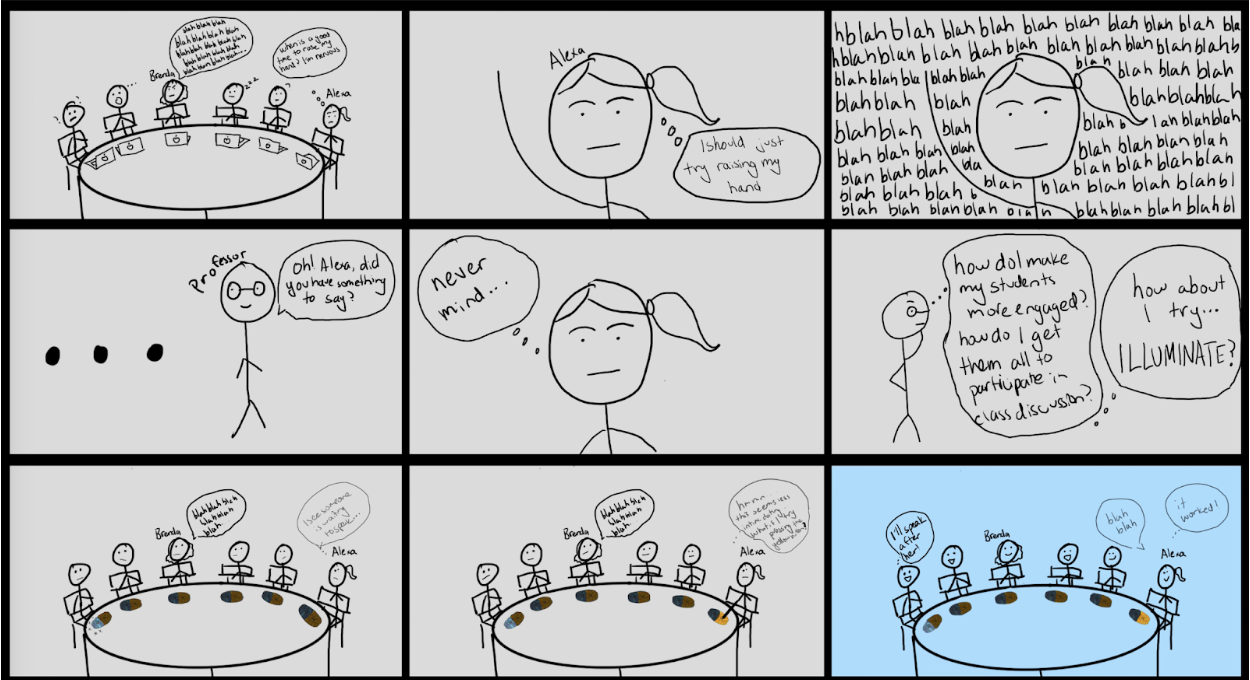
Illuminate has come a long way from its original form—take a look at how it’s evolved.

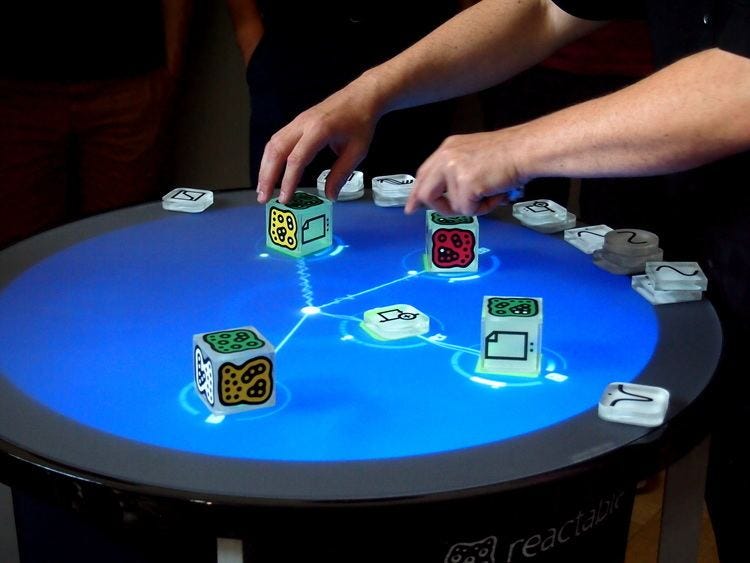
Usability and intuitiveness were key priorities in our initial design process, but we also focused on aesthetics. Visual elements can enhance the user experience, so we aimed to create a playful design using color and shape, something that would stand out and draw attention.

As we gathered resources and refined the scope of the project, our design evolved. We maintained an emphasis on color and visual appeal while introducing a flatter, more compact shape to improve practicality.
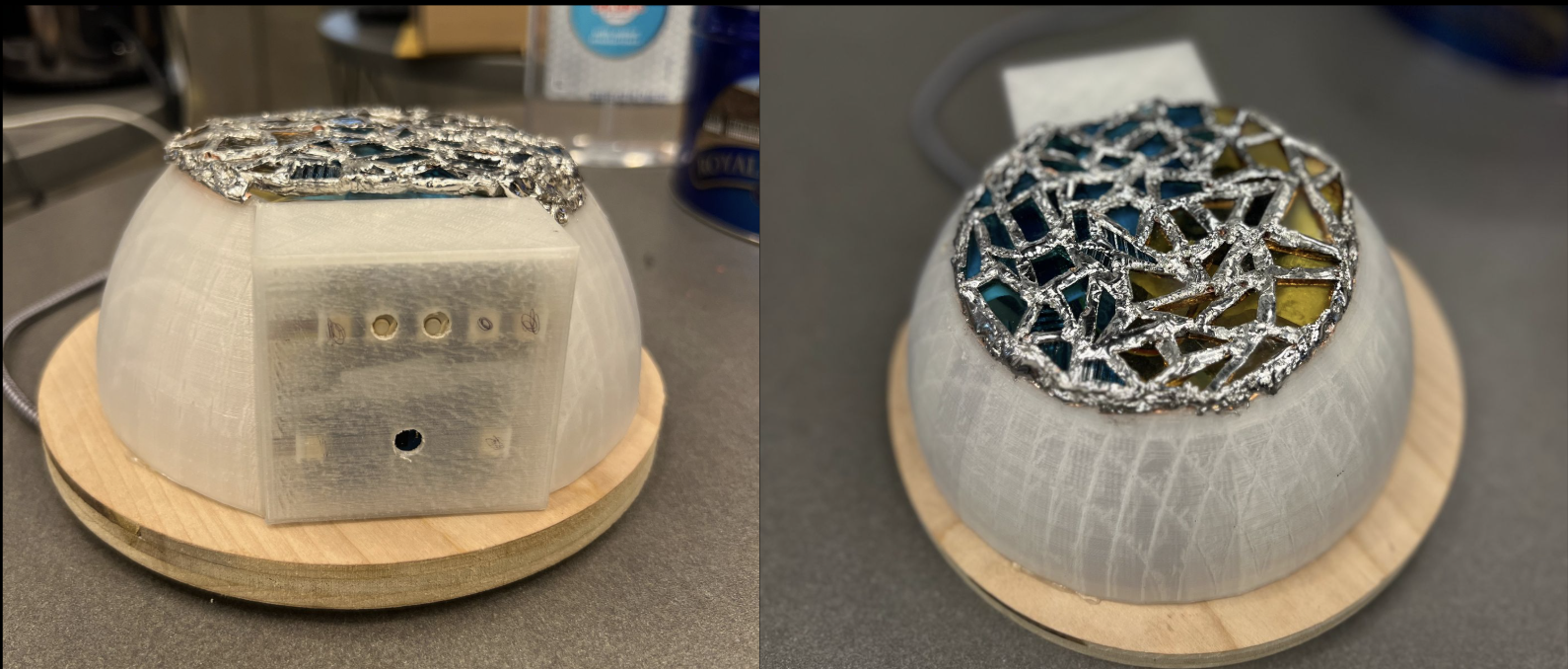
Our low-fidelity prototype came out perfectly. But, moving from our low-fidelity to high-fidelity prototype involved some trial and error. We initially planned for the entire artifact to be made of glass, but even with soldering, it was difficult to secure the pieces.
To address this, we shifted to 3D-printed materials for most of the structure while retaining a glass top. This allowed us to preserve our intended aesthetics and incorporate the blue and yellow lighting, while also staying realistic about feasibility and project constraints.
Our high-fidelity prototype balances function and aesthetics. The glass component signals both urgent and non-urgent inputs while also enhancing the visual design. We selected a dome shape to allow space for the Arduino wiring to be stored effectively.